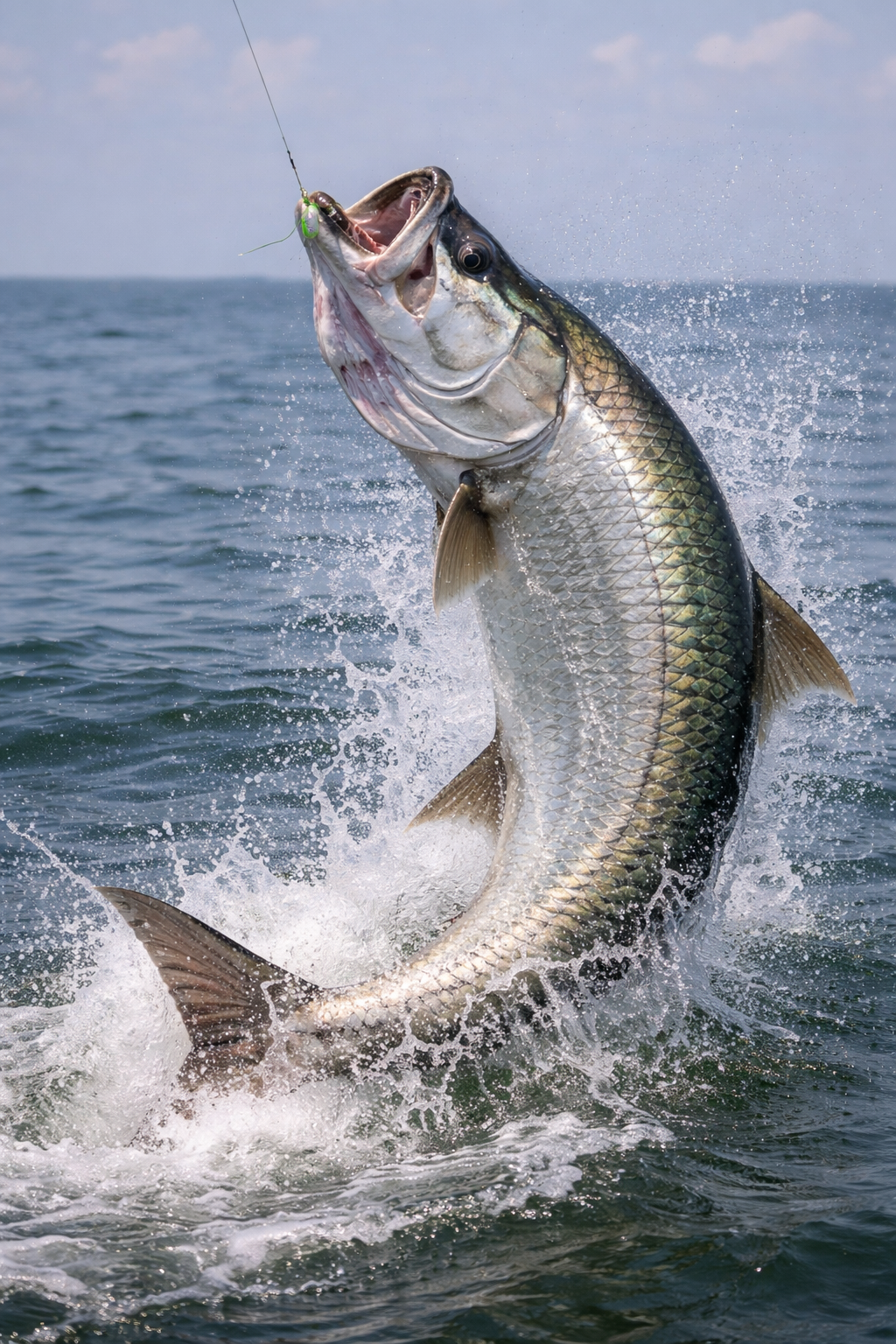
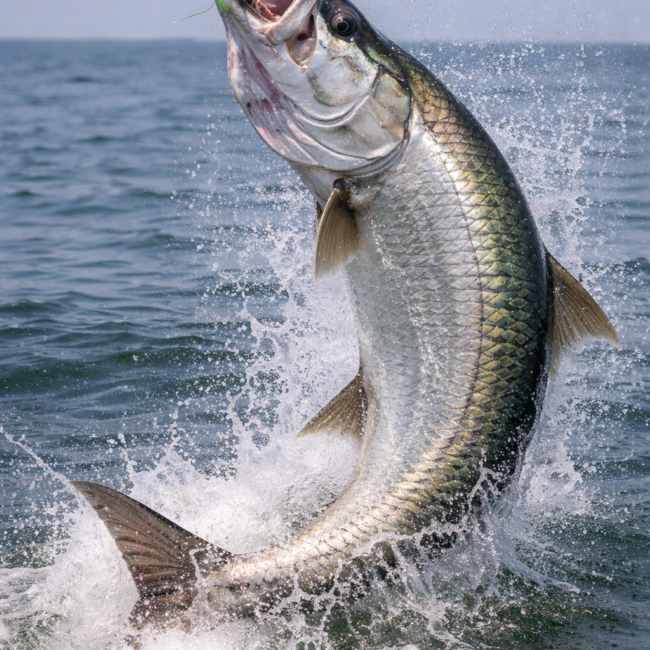
The tarpon hit like it meant to end the day right there.
It was supposed to be a clean, controlled beach-side setup—one of those mornings off Key West where everything lines up just enough to give you a real shot at a big fish. Captain Phil had a young couple on board, both excited, both a little nervous, the way people are when they know they might hook something far bigger than themselves.
The water along the beach was already moving harder than usual. Waves were stacking up and breaking with some force, pushing bait around and creating that kind of turbulent edge where big fish like to feed. It wasn’t the calmest place to hook into a tarpon, but it was the right place.
When the fish ate, there was no question what it was.
The rod loaded instantly, the line came tight, and then it took off with the kind of speed and weight that doesn’t need explanation. Phil called it out as a tarpon before the first run even finished. A big one.
The young woman took the rod.
She was smaller, not built for brute force, but she had the kind of focus that matters more once the fight starts. Phil gave quick instructions—keep the line tight, let the drag work, don’t try to muscle it—and for a moment, everything looked like it might go according to plan.
Then the fish changed the plan.
It ran straight out of the beach zone and into rougher water, pulling the boat with it. The waves got steeper, the surface more chaotic, and the clean setup they had at the start disappeared behind them. Now they were in it—wind, chop, and a powerful fish dictating every move.
That’s when the first real problem hit.
The tarpon surged again, harder this time, and the angle of the line shifted quickly. The woman tried to adjust, but the pull caught her off balance. The force of the run dragged her forward across the deck, pulling her toward the bow before she could reset her footing.
She dropped to her knees hard, still holding the rod, still locked into the fight.
Phil moved immediately, steadying her and the rod at the same time, keeping the line from going slack. Losing tension for even a second with a tarpon like that is usually enough to end it.
But the fish was still on.
And it wasn’t done escalating.
Somewhere in the middle of that chaos—waves breaking, line cutting through the water, the boat shifting under them—another shape appeared.
A bull shark.
Big, fast, and locked onto the same fish they were fighting.
It came in aggressive, drawn by the struggle. That’s the risk with tarpon in that kind of water. A long fight doesn’t just wear down the fish. It advertises it.
The shark made a move at the tarpon, and the situation changed instantly from a fishing fight to a race against something else entirely.
Phil reacted without hesitation. He backed off the drag and let the tarpon run. The idea was simple—give the fish enough freedom to get away from the shark, break the immediate line of attack, and hope it could outrun the danger.
For a moment, it worked.
The tarpon surged off, pulling line, putting distance between itself and the shark. The tension in the boat shifted slightly, just enough to think they might have avoided losing it right there.
Then the line angle changed again.
The fish dove deep and cut back under the boat.
That’s where things got technical.
The line wrapped around the engine.
It happens fast and it’s almost always a bad sign. Once the line is under the boat and around the motor, you’re dealing with sharp edges, tight angles, and very little room for error. Most of the time, that’s where the fight ends—either the line snaps, or the fish works itself free.
Phil got to the back immediately, working to free the line without putting too much pressure on it. The woman kept just enough tension to maintain contact, but not enough to risk breaking anything.
It took a few tense moments, but eventually the line came loose.
And for a second, it felt like it was over anyway.
The assumption was that the fish had gotten off during the wrap. That’s usually how it goes. Between the slack, the angle, and the chaos, most fish don’t stay pinned through that.
But when they pulled tight again, the line came alive.
The tarpon was still there.
Still hooked. Still fighting.
At that point, the fight had already gone long, and it was starting to wear on everyone involved. The fish had made multiple runs, the conditions hadn’t improved, and the added pressure from the shark and the wrap had pushed things well past a normal outing.
But the woman stayed with it.
She kept the rod up, followed instructions, adjusted when she needed to, and settled into the kind of steady effort that’s required for a fish like that. It wasn’t about bursts of strength anymore. It was about endurance and control.
Time stretched.
The initial chaos gave way to a long, grinding fight. The tarpon still had power, but its runs shortened. Its direction became more predictable. Slowly, piece by piece, they gained on it.
By the time they were getting close, nearly an hour and forty-five minutes had passed.
That’s a long time to stay locked into a single fish, especially in moving water.
When the tarpon finally came alongside the boat, it was everything you’d expect from a fish that had put up that kind of fight. Big, heavy, still strong enough to make one last move if given the chance.
This is where it usually ends cleanly—leader in hand, quick control, photos, release.
But nothing about this fight had been clean.
As the fish came up, the line went slack for just a moment.
Just enough.
The hook popped free.
After nearly two hours, after everything it had taken to get that fish to the boat, it was suddenly no longer connected.
Most of the time, that’s the end of the story.
But Phil wasn’t done with it.
He lunged over the side of the boat, reaching into the water as the tarpon hung there for a split second in that space between control and escape.
He got both hands on it.
For a moment, he held it—roughly 170 pounds of muscle and energy, still very much alive and capable of deciding otherwise at any second.
They got a couple of quick photos.
And then the fish made its decision.
It ripped free of his grip and disappeared back into the water, gone as fast as it had come in.
There was no clean release. No controlled ending.
Just the sudden absence of something that had dominated the last two hours.
For a second, nobody said much.
Then it settled in.
They had hooked it on the beach, fought it through heavy water, avoided losing it to a shark, cleared a wrapped line, stayed with it for nearly two hours, and still brought it to hand—if only for a moment.
It wasn’t perfect.
But it was enough.
Because sometimes the story isn’t about how cleanly it ends.
It’s about everything it took to get there.