The charter was supposed to last four hours. Instead, the guests were back at the marina with their limit of lobster before most lobster charters are even getting started.
Every summer, Captain Phil spends part of the season in Key West. While most of the year is devoted to fishing charters around Tampa Bay, Phil heads south from mid-July through the end of summer to take advantage of one of the most anticipated events in the Florida Keys: lobster season.
On this particular afternoon, the charter came from a friend of Phil’s named Pete. Pete specializes in lobster charters and is well known among visitors looking to experience the famous Keys lobster fishery. When his schedule fills up, which happens often during the season, he occasionally sends trips Phil’s way.
This charter was one of those referrals.
The group consisted of nine people altogether, including several men and women and an older teenage boy who had brought a friend along. It was a typical vacation charter. Nobody seemed to be in a hurry, and by the time everyone arrived at the marina, got settled aboard, and headed out, it was already early afternoon.
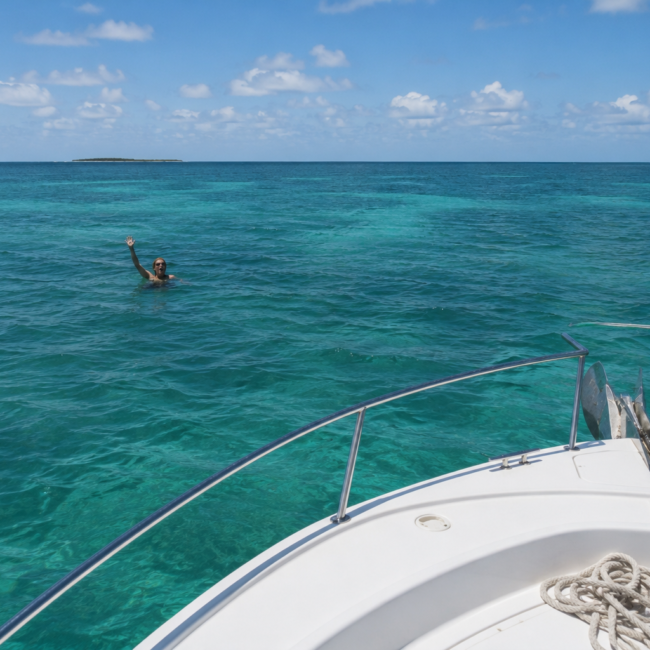
The weather was beautiful. The water around Key West was clear enough to see the bottom in many places, and a light breeze kept the tropical heat comfortable. As the boat made its way toward one of Phil’s favorite lobster spots, the guests relaxed, enjoyed the scenery, and settled into vacation mode.
When they arrived, Phil anchored over an area he had worked successfully before.
Only three people decided to get into the water: Phil, the charter’s son, and the son’s friend. The rest of the guests were perfectly content to stay aboard, enjoy beverages, and take in the views of the turquoise water surrounding the boat.
At first, the lobster hunting was disappointing.
The bottom looked promising, but after nearly twenty minutes of searching ledges, coral patches, and rocky structure, they had only found two legal lobsters. It wasn’t exactly the pace anyone hopes for on a charter with nine people aboard.
Phil continued searching. Years on the water had taught him that productive structure is rarely isolated. If lobster habitat exists in one area, there is often something better nearby.
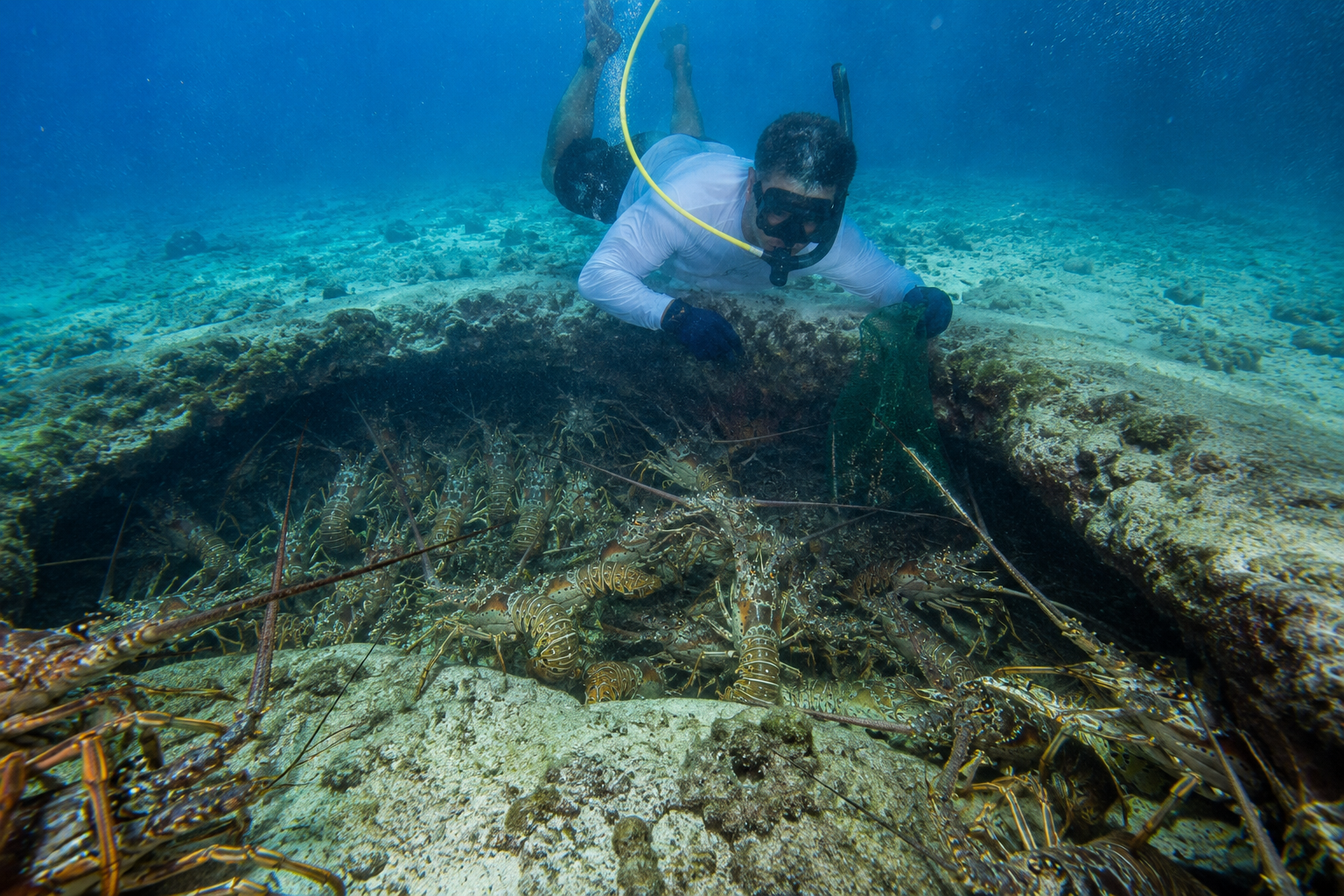
As he expanded the search, he noticed a significant drop-off that he hadn’t initially investigated. The bottom changed abruptly, forming a deeper ledge along what appeared to be part of a larger underwater ridge.
His first thought was that it might be too deep.
The group was using snorkeling and hookah gear, and there comes a point where a ledge simply isn’t practical to work. Phil studied it for a moment before deciding to take a closer look.
It turned out to be exactly what they needed.
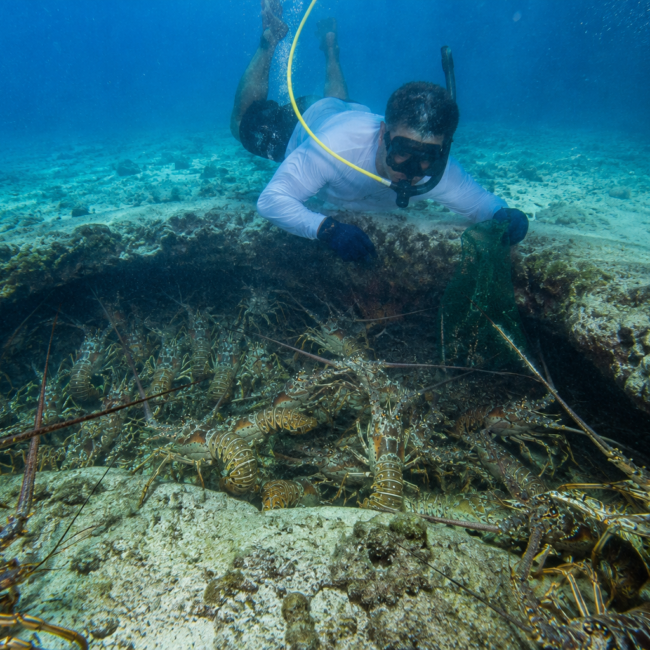
The ledge sat along a ridge associated with the Atlantic Shelf, and beneath the overhangs were lobster. Lots of them.
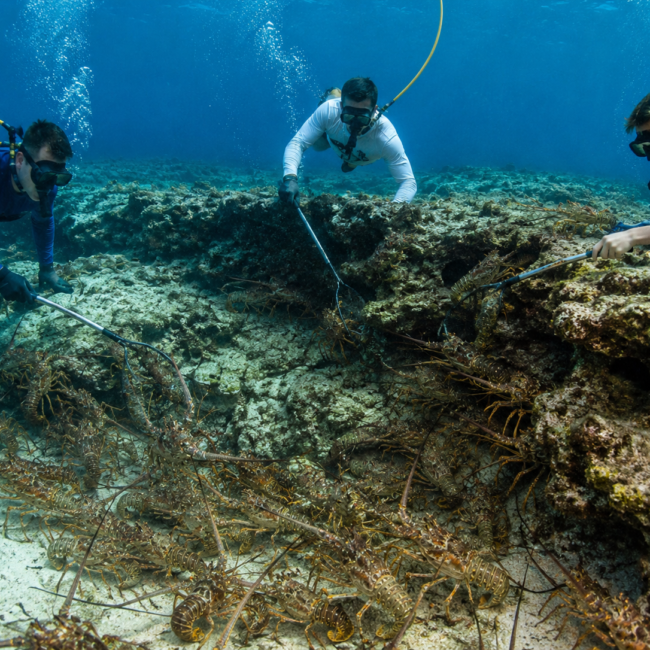
Phil immediately began working the structure. Every time he looked beneath another section of ledge, more antennae appeared. He directed the two younger divers toward productive areas, and before long the pace of the trip changed completely.
What had started as a slow afternoon suddenly became one of the most productive lobster hunts of the season.
One by one, legal lobsters were measured and added to the catch. The coolers aboard the boat began filling rapidly. The guests who had remained topside could see that something had changed and watched the action unfold from above.
The ledge simply kept producing.
By the time the activity finally slowed, the numbers were remarkable. They had harvested fifty-four legal lobsters. Fifty-two of those came from that single stretch of structure.
The charter had effectively limited out.
For the guests aboard, it represented hundreds of dollars’ worth of fresh Florida lobster. More importantly, it was an experience they weren’t likely to forget.
Phil looked at the clock and laughed.
The charter had only been underway for about an hour.
Technically, there were still several hours remaining on the trip. They could have continued searching other areas or spent more time in the water, but there was really no reason to do so. The objective had already been accomplished.
The coolers were full. The guests were thrilled. Dinner plans were already being discussed.
Phil pulled anchor and pointed the boat back toward the marina.
The ride home was filled with laughter and conversation as everyone admired the catch. What had begun as a slow afternoon with only two lobsters in the first twenty minutes had turned into a complete limit for the entire charter.
Looking back, Phil knows the trip came down to a simple decision. It would have been easy to dismiss the deeper ledge and continue searching the shallower bottom. Instead, experience told him to take a closer look.
That one decision transformed an ordinary lobster charter into one of those rare days that captains remember for years.
In the Keys, you never know what lies over the next ridge. On that afternoon, it happened to be fifty-two lobsters waiting beneath a ledge on the edge of the Atlantic Shelf.